
How we check Roblox scripts: the evidence chain#
redzhub.dev fetches loaders as text and never runs them, so a status is not proof a script works. Roblox script verification here means tracing where published text came from, checking identifiable remote targets, scanning for patterns and deciding whether copying should be enabled.
Our pages draw from a catalogue built after discovery and screening. A source listing tells you what an uploader published. A fetch tells you what a remote address returned, and editorial review explains what those observations support. Keeping those records separate helps you distinguish a feature claim from something we actually observed.
- Discover candidates through ScriptBlox searches, upstream GitHub research and competitor loader lists.
- Associate game-specific discovery candidates with Roblox universe identifiers where available.
- Analyse published text and fetch recognised remote targets as text.
- Aggregate blocking patterns, informational flags and obfuscation evidence.
- Build catalogue entries, apply exclusions and retain a ledger of entries without copying enabled.
Start with the source: finding a listing and confirming its claims are different steps.
Where do we find Roblox script listings?#
ScriptBlox searches, GitHub research and competitor loader lists help us find scripts to review. ScriptBlox API records include uploader-published text, titles, game identifiers, feature descriptions and listing metadata. GitHub adds repository ownership, licence information and file listings; loaders from an author’s README enter through manually curated records.
Our discovery process uses the ScriptBlox JSON API because automated HTML requests returned HTTP 403. GitHub checks and competitor comparisons add context, but our screening tools do not crawl every repository or competitor website. Competitor links are leads, not confirmation of ownership or compatibility. Manually curated entries keep their source and rights information when added to the catalogue.
Roblox APIs provide the place-to-universe lookup and game metadata. Those responses concern game identity and published game facts, not approval of a script. A listing title, uploader verification badge or high view count does not establish who authored the remote payload.
The source verification guide explains how to separate uploader identity from upstream ownership. Game matching adds another evidence layer before text screening begins.
Game matching and search limits#
Game-specific discovery resolves a candidate’s listed place identifier through the Roblox place-to-universe endpoint. Candidates with the target universe are retained; the target comes from a configured seed when configured, otherwise from the most frequent resolved universe among name-matched candidates. Matching therefore goes beyond a shared game name.
A separate title-matched path retains candidates without a positive game identifier. Those candidates are not equivalent to a confirmed place-to-universe match. A game association also does not demonstrate that the published loader contains the corresponding route or that the remote payload behaves as described.
Discovery searches use popularity and creation-date ordering and skip entries the source already marks as patched. Search and detail caps mean the result is a bounded sample, not a complete inventory of every published script. API failures and missing detail records further constrain the evidence available to screening.
For a game-specific listing, look for the game identifier as well as the title. A matching name alone leaves more uncertainty about which Roblox experience the uploader meant.
Text-only checks and nested loader limits#
Our scanner reads the published text, finds literal HTTP or HTTPS addresses in recognised fetching calls and fetches up to four initial targets. Short ScriptBlox raw-wrapper records can first be replaced with the returned raw text. Line endings and a leading byte-order mark are normalised for discovered records before analysis.
Each target record includes the requested and final URL, HTTP status, size, error, truncation indicator and, when the response qualifies, a SHA-256 digest. Analysis requires a 2xx response with more than 20 trimmed characters and excludes responses beginning with a recognised HTML opening. A server response alone therefore does not mean there was enough text to analyse.
Nested loader following stops at depth 2: an initial target at depth 1 can lead to one additional target level. Following requires readable, non-obfuscated text with between one and six recognised fetching URLs. URL fragments containing braces, a formatting placeholder or a trailing concatenation fragment are skipped at that nested step.
The scanner does not evaluate expressions to reconstruct addresses. Runtime-built URLs, encrypted strings and later branches can remain outside the fetched chain. Even readable code can conceal dependencies from a literal-pattern extractor. The remote loader explanation describes why inspecting the published loader line alone cannot establish what a changing remote endpoint supplies.
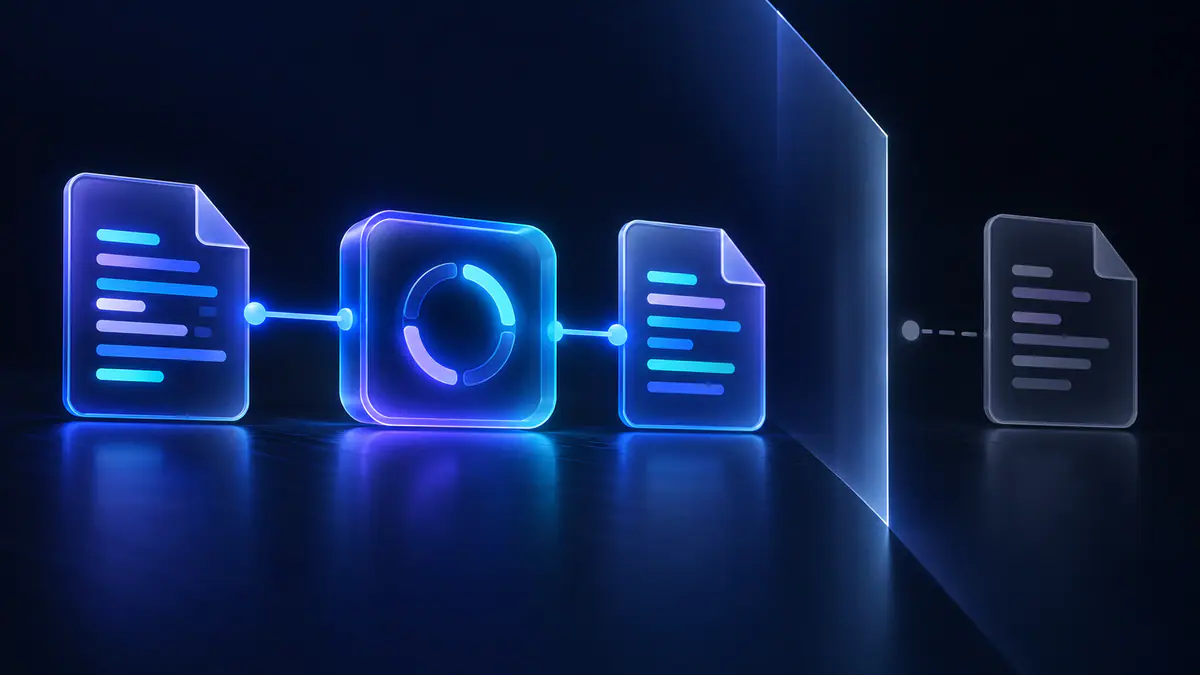
The next step scans the fetched text for blocking patterns and informational flags.
Blocking patterns and informational flags#
Six categories of blocking patterns keep an entry out of normal listings, even when its endpoint returns HTTP 200. Each match identifies specific text. Context still matters when explaining why that text triggered a rule.
| Blocking category | Text the rule looks for |
|---|---|
| Hard-coded Discord webhook | A Discord webhook endpoint containing an identifier and token-shaped path |
| Session-cookie reference | The Roblox session-cookie name |
| Cookie access | Selected cookie-getter calls or cookie assignment patterns |
| Purchase prompt | Selected MarketplaceService purchase-prompt calls |
| Binary download | HTTP links ending in executable, installer, batch, Android-package or library extensions recognised by the rule |
| Credential prompt | Text asking the reader to enter or type a password |
Informational flags do not block copying on their own. The implemented list covers key-system references, Discord invites, clipboard writes, file writes, teleport references, queue-on-teleport references, HTTP-post or request patterns, the word webhook, selected URL shorteners and numeric IP hosts.
A generic webhook mention is informational; a matched hard-coded Discord webhook endpoint is blocking. Likewise, a key-system flag reports a reference rather than a successful key exchange. The catalogue records key required when either the uploader marks a key or screening finds a key-system reference; an uploader’s no-key claim remains a claim.
Block and information matches are combined across published text and fetched children. The catalogue builder adds a separate title rule for selected currency-generator, account-theft and password wording. Pattern lists have defined coverage, so absence of a match cannot establish absence of harmful behaviour. Obfuscation imposes an additional limit on inspection.
How do we detect obfuscated code?#
Our obfuscation check looks for named markers and unusual text patterns. It does not decode protected code. Marker matching examines the first 4,000 and last 2,000 characters for names including Luraph, MoonSec, IronBrew and other configured signatures.
Without a marker, text longer than 3,000 characters is classified as obfuscated if its longest line exceeds 15,000 characters, or if counted decimal and hexadecimal escape sequences divided by text length exceed 0.04. The denominator is character length; the numerator counts matched sequences. The calculation is a heuristic, not a probability of harmful behaviour.
Obfuscation detected anywhere in the inspected chain contributes to the aggregated flag and prevents that chain receiving the readable-text status through the normal primary-target path. Obfuscated target text also stops further nested following. The obfuscated script guide explains the resulting visibility gap.
The status table shows how those observations become labels, including cases where the label needs a closer look.
What does each script status mean?#
Each script status describes the text and fetch result from a check. The labels correspond to stored values such as static-screened and loader-reachable. Read the evidence and the boundary together: two entries can share a label while leaving different parts of their code uninspected.
| Display status | Intended evidence meaning | Implementation boundary |
|---|---|---|
| statically screened | Readable text with no blocking pattern found; normally an HTTP 200 target | Discovered readable inline text can qualify without a target; primary-target logic does not require every dependency to succeed |
| loader reachable | A fetched loader target is available but obfuscated or protected text limits inspection | The discovered-record fallback can also receive this label for mixed or otherwise unclassified target responses |
| flagged | A blocking pattern was found | The builder also adds selected title-based blocking matches; flagged entries leave normal listings |
| dead | Targets return HTTP 404/410 or are treated as empty | All initial targets must meet that condition; HTTP 200 text of 20 trimmed characters or fewer counts as empty |
| unknown | Fetching or inspection could not establish the intended evidence | Discovered targets all returning status 0, 403, 5xx or recognised HTML reach this branch; obfuscated inline text also qualifies |
Blocking evidence takes precedence over dead or unknown decisions. For discovered records, the primary target returning HTTP 200 with no aggregated obfuscation can produce statically screened after the earlier conditions are checked. The final fallback is loader reachable. Curated records use a narrower branch: a primary HTTP 200 selects the readable or obfuscated label; other unresolved cases become unknown.
One detail deserves a closer look: blocking, informational and obfuscation flags from a nested target carry through to the parent, but a failed nested fetch does not independently determine dead or unknown status. A readable primary loader with a failed child can therefore retain statically screened. Reading the target evidence matters more than treating the label as a verdict on the whole dependency chain.
Status is only one input to the separate copy decision.
Copy rules and permission to publish#
The copy gate enables copying only for statically screened or loader reachable entries that also meet the code-kind, patched, blocking and hide conditions. A reachable URL alone is insufficient.
| Gate condition | Copy decision |
|---|---|
| Status is statically screened or loader reachable | Eligible to proceed through remaining conditions |
| Status is flagged, dead, unknown or removed | Disabled |
| Code kind is full source | Disabled |
| Source marks the entry patched | Disabled |
| Blocking list contains any match | Disabled |
| Entry identifier appears in the hide override | Disabled |
| Eligible status, loader or snippet, no other failing condition | Enabled by the current expression |
A discovered loader must have at most 25 lines, at most 4,000 characters and at least one recognised fetching URL. Otherwise, text of at most 40 lines and 4,000 characters is classified as a snippet; larger text becomes source. Curated inputs explicitly enter as loaders. Classification measures text shape rather than resolving copyright ownership.
The editorial rights basis is an uploader-published loader or a loader published in the author’s README for copying, with attribution, a source link and removal on request. Publication of that loader does not grant permission to republish the entire repository. Full source is not republished without a licence permitting it; the present copy gate disables source entries altogether, without a licence-based exception.
The copy check has a gap you should know about: it does not separately validate the recorded permission to publish. ScriptBlox entries other than full source, including snippets, automatically receive the uploader-published-loader rights category; manually curated entries keep their existing category. Our editorial policy requires withholding entries with unknown rights, but the current copy calculation does not enforce that separately. Review the rights record and source alongside the copy flag.

Entries failing the gate feed the exclusion ledger, while duplicate text is consolidated separately.
Duplicate listings, exclusions and a Redz Hub example#
Our catalogue merges duplicate code using a hash: a fingerprint of the published text after repeated whitespace becomes single spaces and outer whitespace is trimmed. Exact copies therefore merge, but the rule is broader than byte-for-byte equality. Different text is not merged merely because the title, hub name or destination URL looks similar.
Merged entries accumulate game associations and a duplicate count. When a duplicate has more source views, its entry data replaces the representative while preserving the accumulated games and duplicate count. Views influence representation; they do not establish authorship or quality.
Every non-copy-enabled entry reaches the internal ledger before deduplication. Flagged, dead and removed entries are then omitted from normal catalogue records; unknown, hidden, patched or source entries can remain as non-copyable records. The ledger is consequently not just a list of dead endpoints and is not a deduplicated count of unique scripts.
The exported ledger retains identifying and source details, status, block categories, target summaries and the check date. Full-source code is omitted; other code is retained there only when shorter than 600 characters. The ledger supports reviewing exclusions without republishing long source bodies.
Our 26 October 2026 Redz Hub check shows why a loader and its dependencies need separate attention. On that date the upstream main loader was readable and returned HTTP 200, while its Blox Fruits route pointed to an empty file. That routing observation came from repository inspection; it should not be mistaken for proof that the literal-URL scanner followed every runtime-built path. The Redz Hub source page carries the identity context for that example.
If a listing credits the wrong source or should be removed, send the specific details through our reporting route.
How can an entry be corrected or removed?#
The report page is the route for listing concerns and takedown requests. Include the affected listing or source URL, the reason for the request and evidence that identifies the disputed material. Rights requests benefit from an upstream publication link and an explanation of the requester’s relationship to the material.
We can mark an entry for takedown, disable copying through a hide setting or add an editorial explanation. A takedown assigns removed status, disables copying and keeps the record out of normal listings when we rebuild. A hide setting disables copying but does not assign removed status or guarantee that the record disappears.
Reports need editorial review; our tools do not settle disputes automatically, and we promise no response deadline. A change to an upstream source also does not directly update our catalogue. Include the URL and the particular attribution, code or status you dispute so we can identify the entry before applying a correction.
Refresh dates and how we check Roblox scripts#
A listing’s check date records its actual screening time. Refreshes require us to rerun the checks manually; we do not promise daily or continuous monitoring. Rebuilding the catalogue from existing screening results carries those timestamps forward. It does not mean the loader was fetched again.
The page’s editorial review date, 26 October 2026, describes this explanation’s review. A source listing’s creation date, a repository push date and a loader fetch date describe different events. A changed remote payload can make an earlier observation incomplete even if the published loader line remains identical.
redzhub.dev fetches loader text without running scripts, so a status cannot prove that a script works or is secure. We do not verify executor compatibility. Roblox states that exploiting and cheating violate its Terms of Use and can lead to account deletion in its Cheating and Exploiting guidance. Using third-party exploit scripts or executors breaks those rules; a copy button does not change that consequence.
redzhub.dev is an independent index, not the Redz Hub developers’ site. Use the source, fetch date and target details together when judging a listing. A recent page review, an old fetch and a new uploader claim describe different events; none should silently stand in for another.